
Mission & PurposeCommunity
Hospitality asa way of life
Christian hospitality isn't about having a perfect home but about making room for others. What the Bible says and how to practise it every day.
By the YWAM Cáceres team
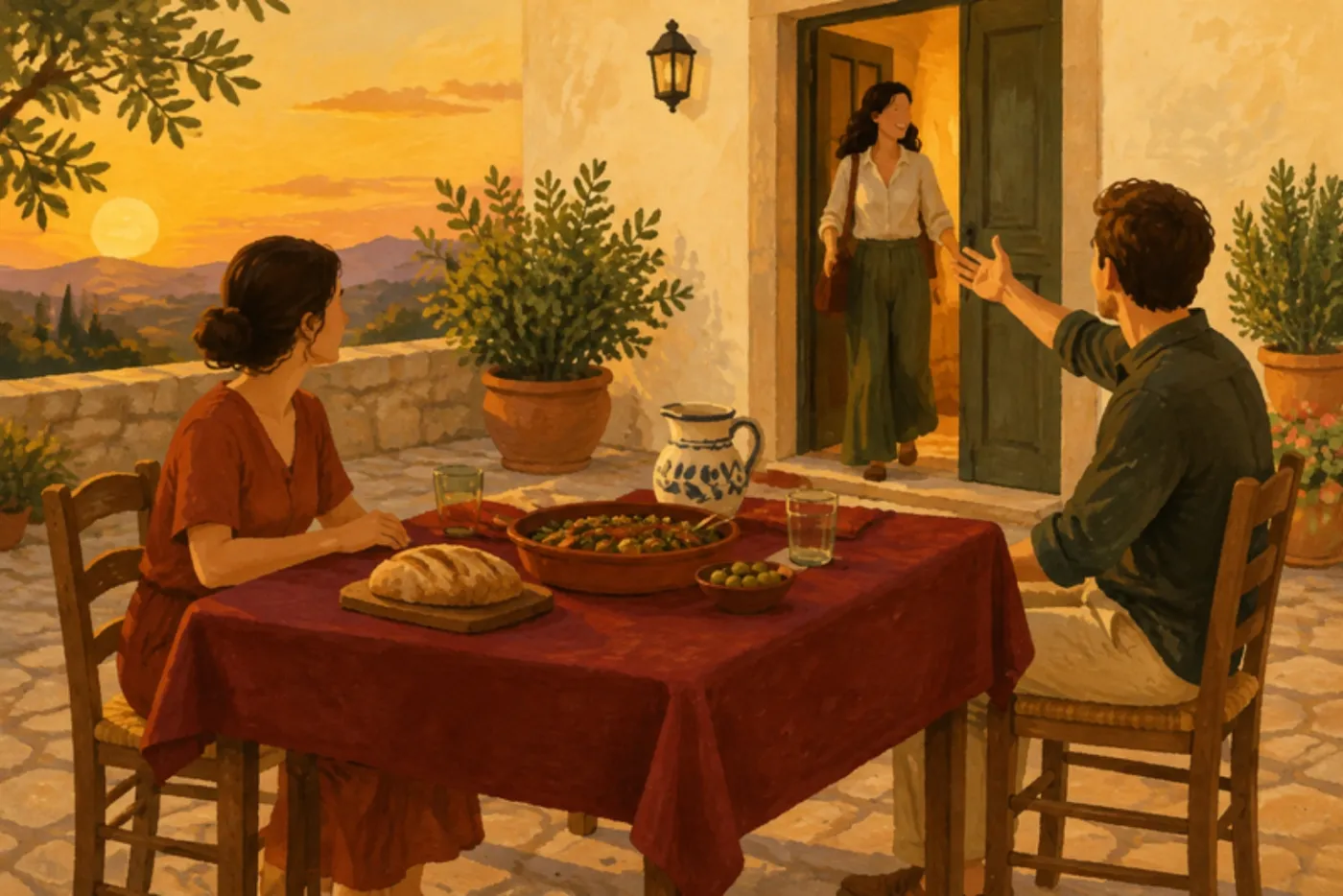
Living hospitality as a way of life means making room for other people as a habit, not just on special occasions: at your table, in your schedule and in your attention. It isn't about having a beautiful home or cooking like a chef. It's about people feeling welcomed, seen and valued when they are with you.
In a world full of hurry, screens and loneliness, opening your door has become almost countercultural. And for those of us who follow Jesus, it's also a very concrete way of showing what God is like.
What is Christian hospitality?
In the New Testament, the Greek word usually translated as hospitality literally means "love of strangers". In other words, it isn't limited to welcoming your usual friends. It includes the person who is different, the newcomer, the one who can't return the favour.
That's why Christian hospitality is more than good manners. It reflects the God who welcomed us first, when we were the strangers. Paul sums it up in Romans 15:7: welcome one another as Christ has welcomed you.
What does the Bible say about hospitality?
Hospitality runs through the whole Bible. A few examples:
- Abraham runs to greet three strangers passing his tent, washes their feet and prepares a meal for them (Genesis 18).
- Israel's law commands love for the foreigner, reminding the people that they were once foreigners in Egypt (Leviticus 19:34).
- Jesus eats with tax collectors and sinners, invites Himself to Zacchaeus's house and teaches us to invite those who can't invite us back (Luke 14:12-14).
- The early church shared meals in their homes with glad and sincere hearts (Acts 2:46).
- The letters urge believers to offer hospitality without grumbling (1 Peter 4:9) and not to neglect it, since some have entertained angels without knowing it (Hebrews 13:2).
It's striking how often Jesus reveals Himself around a table. The disciples on the road to Emmaus recognised Him when He broke the bread, after they had asked Him to stay with them (Luke 24).
How can I practise hospitality without a big house?
Many people think they can't be hospitable because they live in a small flat, share a house or don't have much money. But hospitality has more to do with attitude than square metres. Some simple ideas:
- Cook a little extra and get used to having one more plate at the table.
- Invite someone new from your class, work or church, especially if they're far from home.
- Offer your time: a coffee without watching the clock, a walk, a hand with moving house.
- Really listen: ask questions, learn names and remember what the other person told you.
- Use public spaces: a park, a café or a town square can also become places of welcome.
The point isn't to impress but to welcome. A simple soup shared with care says more than a perfect dinner served in a rush.
Hospitality and mission
Plenty of people will never walk into a church, but they will accept a dinner invitation. The table is where defences come down, stories get told and friendships begin. For many, their first taste of God's love comes through someone who opened their home.
At YWAM Cáceres we describe ourselves as a family, a refuge and a home, and we share the Gospel mainly through friendships. In our English conversation club, for example, people practise the language, get to know each other, keep coming back and build relationships that go beyond each session. You can read about this and our other ministries.
Spain also has a rich culture around the table. Tapas and long after-meal conversations, what Spaniards call sobremesa, are part of social life, and that opens many doors for hospitality that feels natural rather than forced.
When hospitality is hard
Let's be honest: opening your life is tiring. Some days you don't feel like having anyone over, some guests aren't easy, and sometimes you simply need rest. Healthy hospitality knows how to set boundaries, protect rest and not confuse serving with burning out.
That's why it works better in community than alone. When several people share the work of welcoming, cooking and listening, nobody carries it all. And when we feel empty, we can come back to the table God Himself prepares for us (Psalm 23:5).
In the end, being hospitable means letting others experience, even for a little while, what it is to be truly welcome. And that is a small picture of the home God is preparing for everyone who comes to Him.
Would you like to meet us?
If you live in Cáceres or are passing through, we'd love to meet you. And if you're interested in living and serving in a community that tries to practise hospitality every day, feel free to ask us about our schools and programmes.
Write to us and we'll get back to you as soon as possible.