
Mission & PurposeArt & Faith
Bezalel:the artist filled with the Spirit
God called him by name and filled him with His Spirit to create. A simple study of Exodus 31 and 35–36 on Bezalel and what he teaches artists today.
By the YWAM Cáceres team
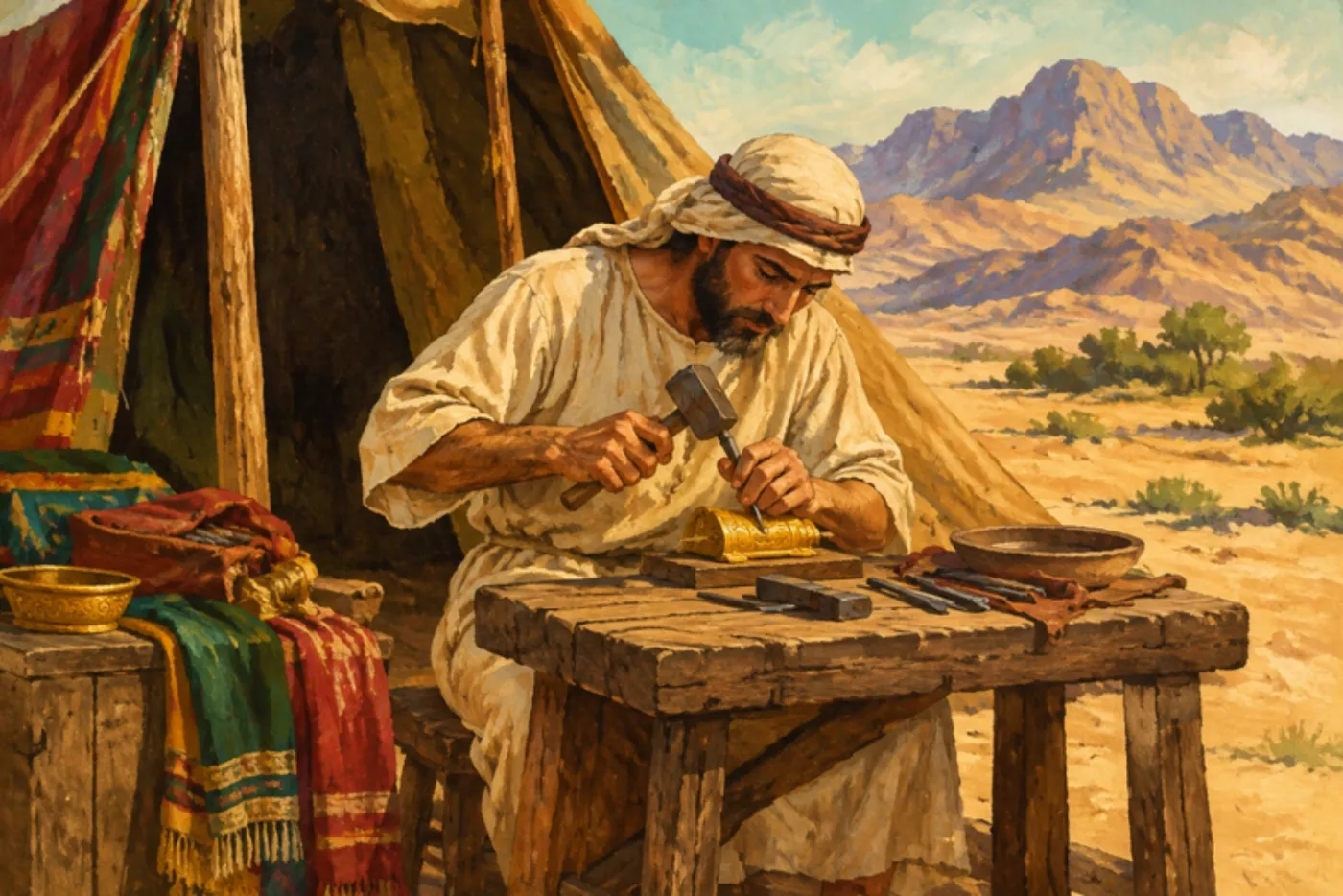
Bezalel is the artist of Exodus: the man God called by name and filled with His Spirit to build the tabernacle. He is the first named person in the Bible described as "filled with the Spirit of God", and the reason was something we would call art and craftsmanship today. His story, in Exodus 31 and 35–36, is short, but it says a lot about how God sees human creativity.
Let's walk through it step by step, as a short Bible study you can do on your own or with a group.
Who was Bezalel?
Bezalel was the son of Uri and grandson of Hur, from the tribe of Judah (Exodus 31:2). He lived in Moses' time, when Israel had just come out of Egypt and was camped in the desert at the foot of Mount Sinai.
His name is often translated "in the shadow of God" or "under God's protection". It sums up his life well: a craftsman who worked close to God's presence, building the place where that presence would dwell among the people.
God had given Moses detailed instructions for the tabernacle: the ark of the covenant, the lampstand, the altars, the curtains, the priests' garments. All of it had to be made from gold, silver, bronze, wood, stones and fabric. Someone was needed to turn a divine design into real objects.
"I have called him by name": art as a calling
God tells Moses, "See, I have called Bezalel by name" (Exodus 31:2, paraphrased). It's the same kind of language the Bible uses for prophets and leaders. Bezalel wasn't picked at random or as a last resort; he was personally called.
That changes how we see artistic work. To God, carving wood or setting stones wasn't second-class work compared with "spiritual" roles. It was a calling, as sacred as that of the priests who would later serve in the tabernacle.
Filled with the Spirit to create
Exodus 31:3 says God filled Bezalel with His Spirit, with wisdom, understanding, knowledge and skill in all kinds of work. The next verses spell it out: designing artistic works, working in gold, silver and bronze, cutting stones and carving wood.
Notice the combination. The Spirit doesn't replace skill; He empowers it. Bezalel had wisdom (knowing what to make), understanding (grasping how to make it), knowledge (mastering the materials) and practical craftsmanship. All of it is the work of the same Spirit who would later come upon prophets, kings and, at Pentecost, the whole church (Acts 2).
An artist who teaches and works in a team
Bezalel didn't work alone. God gave him a partner, Oholiab son of Ahisamach, from the tribe of Dan (Exodus 31:6). Judah was a large, prominent tribe; Dan was far more modest. God brought together two artists from different backgrounds for the same work.
God also put skill in the hearts of many other craftspeople. And Exodus 35:34 adds a beautiful detail: God gave Bezalel and Oholiab the ability to teach. Their gift wasn't only for producing but for training others. In Exodus 36:1-2, Moses calls everyone whose heart moved them to come and work, and the project becomes a community effort.
Obedience, generosity and rest: the contrast with the golden calf
Between Exodus 31 and Exodus 35 there's a story we shouldn't skip: the golden calf (Exodus 32). While Moses is on the mountain, the people demand a visible god, and Aaron melts down their gold and shapes it with a tool.
The same materials and similar skill serve two opposite ends. In one case, art comes from impatience and ends in idolatry. In the other, it comes from obedience and prepares a place for God's presence. The question isn't whether art is good or bad, but whom it serves.
When the work began, the people brought freewill offerings every morning. Eventually the craftsmen told Moses there was more than enough, and Moses had to ask people to stop bringing gifts (Exodus 36:3-7). It's one of the few places in the Bible where people are asked to stop giving.
It's also striking that right after calling Bezalel, God restates the Sabbath command (Exodus 31:12-17). Even the holiest work has a rhythm and a rest.
What does Bezalel teach us today?
- Art can be a calling: God calls artists by name, not only preachers.
- Spirit and skill go together: being anointed is no excuse for not learning the craft.
- Art thrives in community: Bezalel worked with Oholiab and many others.
- Teaching is part of the gift: mature artists train the next generation.
- Whom your work serves matters: the same skill can raise an idol or a place to meet God.
- Rest is obedience too: creating for God doesn't mean never stopping.
If this story speaks to you, you might want to read more about what the Bible says on art in Art & Faith, or explore SCART, where lectures such as "Art in God's story" and "Cultural mandate" dig into these themes in depth.
Do you sense God calling you to create?
SCART is a 5-month school to deepen your artistic calling on a solid biblical foundation, with mentoring in craft and character, much like Bezalel and Oholiab taught others.
The next school doesn't have a date yet, so write to us and we'll keep you posted.