
Mission & PurposeArt & Faith
Theatre as atool for evangelism
Jesus taught through stories and the prophets acted out their messages. Find out why theatre opens conversations about God and how to use it well.
By the YWAM Cáceres team
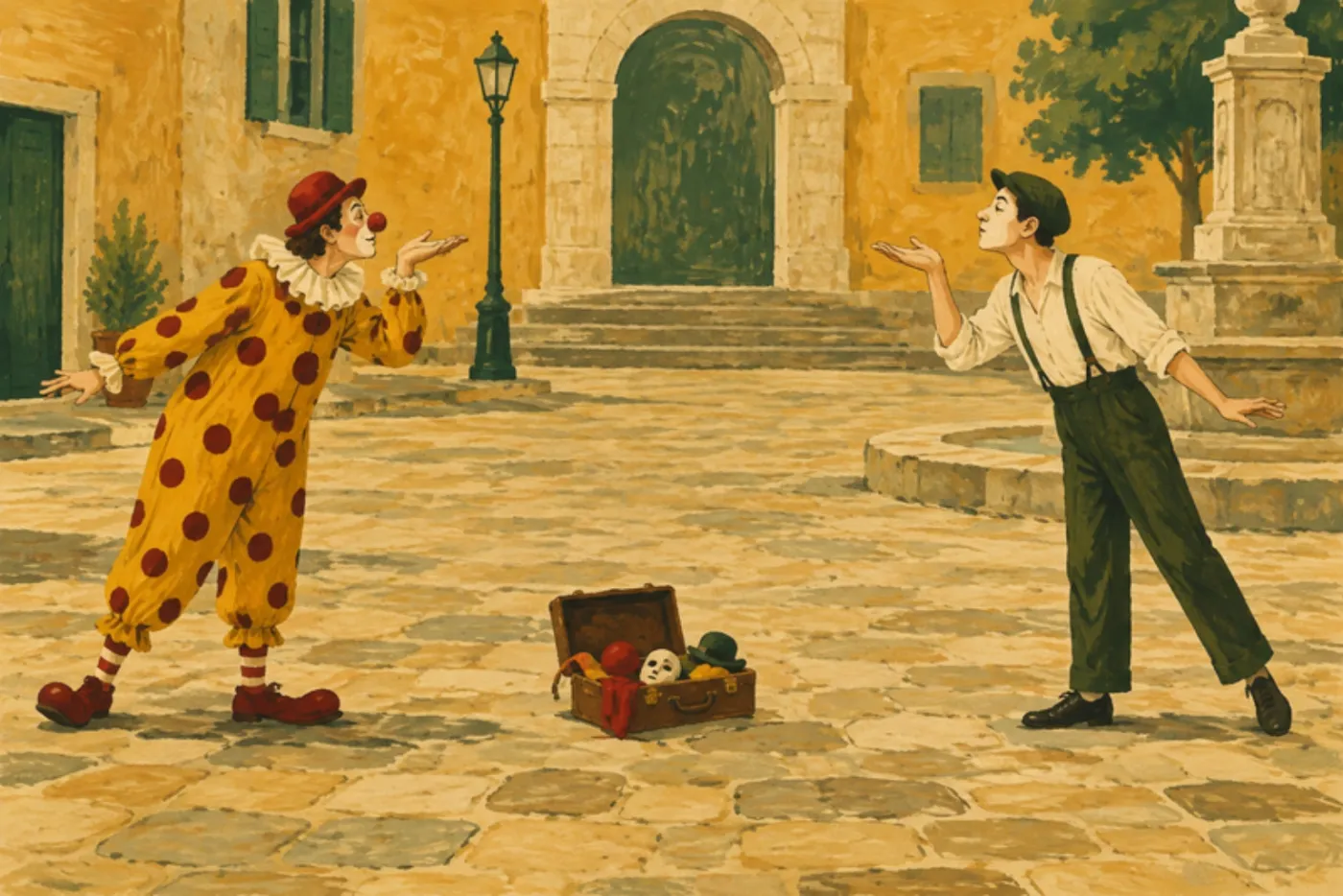
Theatre is one of the oldest and most effective tools for evangelism, because it tells the Gospel as what it is: a story. A good scene can make someone who would never walk into a church stop, laugh, feel something and start asking questions about God. Best of all, you don't need a big stage or a big budget to begin.
In this article we look at why it works, what formats exist, how to prepare a piece and what to watch out for so that theatre truly serves the Gospel.
Why does theatre work for sharing the Gospel?
Jesus taught through stories. The prodigal son, the good Samaritan, the lost sheep: his parables are scenes with characters, conflict and resolution. People didn't just hear them; they saw themselves in them.
The Old Testament prophets went further and acted out their messages. Ezekiel built a model of Jerusalem under siege (Ezekiel 4). Jeremiah smashed a clay jar in front of the elders to show the judgement that was coming (Jeremiah 19). These were visible actions people couldn't forget.
Theatre reaches both mind and emotions at once. It lets the audience identify with a character and see their own life from the outside. That's why it opens conversations that a direct speech often shuts down.
A little history: theatre and faith in Spain
The link between theatre and faith runs deep in Europe. In the Middle Ages, Bible scenes were performed in churches and town squares so that ordinary people, most of whom couldn't read, could get to know the stories of Scripture.
Spain's Golden Age produced the autos sacramentales, one-act plays that presented truths of the faith through allegory. Calderón de la Barca wrote some of the best known, such as The Great Theatre of the World, where human life is shown as a performance in which each person plays a part before God. Today, in a highly secular society, the stage is still a place where the big questions can be raised.
Formats for evangelistic theatre
There is no single way to do theatre with an evangelistic purpose. Here are some common formats:
- Street theatre: short pieces in squares or parks, designed to catch the attention of passers-by. They need energy, clarity and strong vocal projection.
- Mime and body expression: wordless scenes that work in any language. Very useful on mission trips abroad.
- Church sketches: brief scenes that support a sermon or a special event, often with guests who aren't believers.
- Clowning: the clown works from vulnerability and humour and can touch deep themes with tenderness. It works especially well with children and families.
- Full-length shows: complete productions in cultural centres or theatres, with room to develop characters and themes in more depth.
How to prepare an evangelistic theatre piece
A good piece doesn't come from last-minute improvisation. A few steps that help:
- Start by praying and listening: ask God what He wants to communicate and to whom. Performing for children in a neighbourhood is different from performing for university students.
- Choose one central idea: one clear truth works better than five mixed messages.
- Care about quality: rehearse, work on body and voice, and ask for honest feedback. Excellence honours God and the audience.
- Leave room for questions: not everything has to be explained. Sometimes a closing silence says more than an added sermon.
- Plan what comes after: decide who will talk with people afterwards and how to connect them with a local church.
What theatre can't do on its own
Theatre opens doors, but it doesn't replace relationships. After a performance, the most valuable moment is often a conversation with someone who stayed behind with a question. That's why a theatre team needs people ready to listen, pray and walk alongside others.
Manipulation is another thing to avoid. A scene can stir strong emotions, and that comes with responsibility. The goal isn't to pull out quick decisions but to show who Jesus is with truth and beauty and let the Holy Spirit do His work. It's also wise to respect the rules of each place where you perform and to work in unity with local churches.
Where can you learn theatre with a biblical foundation?
If you want to use theatre in evangelism, it helps to train in craft and biblical foundations together. At SCART, the School of Culture and Art, theatre is one of the three fixed weekly workshops, along with body expression and visual arts, and there are one-off workshops like clowning and creative writing. On the two-month outreach, the group puts together a show or short pieces to present in cultural centres, theatres, streets and churches.
You don't need to be a professional actor. What matters is a willingness to learn, work as a team and let God use your voice and body to tell His story.
Want to learn theatre to serve God?
At SCART, theatre is a fixed weekly workshop alongside body expression and visual arts, and on outreach we take our pieces to streets, theatres and churches. You don't need to be a professional.
The next school doesn't have a date yet, so write to us and we'll let you know when applications open.